The best Webflow agencies for fintech websites in 2027 are Flowfye, Flow Ninja, Parallax, Finsweet, Amply, Digidop, and Veza Digital. Flowfye suits global fintech startups and growing platforms that want strategy, design, and development in one team. Flow Ninja and Parallax suit large payments and banking brands. Finsweet suits B2B fintechs selling to financial institutions, Amply suits B2B finance software, Digidop suits European fintechs, and Veza Digital suits well-funded consumer and neo-banking brands.
A fintech website has to do something most websites don't: earn enough trust that a stranger will connect a bank account, move money, or book a demo with a compliance team on the call. That takes clear explanations of complex products, visible security and regulation, and pages your legal team can review without slowing every launch. This guide shows which Webflow agencies have done that work, and how to choose between them.
Why fintech companies choose Webflow
Fintech companies choose Webflow because marketing can publish and test pages without waiting on engineering, while hosting, security, and updates are handled by the platform. That matters in an industry where product teams are busy with regulated software and the website still has to move at campaign speed.
Webflow's own customer stories show the pattern:
- Ebury, which moves money for 27,000 businesses in 40 countries, replaced 30 separate WordPress sites with one Webflow platform and doubled its search visibility index.
- Backbase, a banking software provider, migrated its entire website to Webflow in eight weeks.
- L&C Mortgages moved off a custom-coded legacy site and became 93% faster to market.
- Ramp redesigned its website in six weeks on Webflow.
For most fintechs, the website is the marketing site, trust centre, and lead engine. The product itself, such as the app, dashboard, or onboarding flow, usually stays on the company's own engineering stack.
How we chose these agencies
We only included agencies with fintech or financial-services work you can check. Each one had to meet four tests:
- Fintech work in public. A named fintech client, a Webflow customer story, or a published fintech case study.
- Verified Webflow partner. A listing and any awards on Webflow's partner directory, which Webflow controls.
- Range of services. Whether one team can cover messaging, design, development, migration, and growth after launch.
- Published starting price. The minimum each partner lists on Webflow, so you can match the agency to your budget.
All details were checked in November 2026. Tiers, prices, and portfolios change, so confirm them before you sign.
The best Webflow agencies for fintech at a glance
| Agency | Based in | Published starting price | Fintech work | Best for |
|---|---|---|---|---|
| Flowfye | Sheridan, US and Dhaka, Bangladesh | $10,000 | Pivot Payables, three fintech Webflow templates | Global fintech startups and growing platforms |
| Flow Ninja | New York, US (team in Serbia) | $20,000 | Checkout.com, Trustly, 21Shares | Large payments and fintech brands |
| Parallax | Leeds, UK | $25,000 | Ebury | Global fintechs with complex integrations |
| Finsweet | Denver, US | $15,000 | Dedicated B2B fintech practice | B2B fintechs selling to financial institutions |
| Amply | Salt Lake City, US | $20,000 | Zeni, BanQu | B2B finance software teams |
| Digidop | Paris, France | $10,000 | eFlow, Ramify, Credial | European fintechs and wealth platforms |
| Veza Digital | Not listed | $50,000 | Slash | Well-funded consumer and neo-banking brands |
Starting prices come from each agency's Webflow profile or directory listing, and fintech work from Webflow customer stories or the agency's own case studies.
The 7 best Webflow agencies for fintech websites
1. Flowfye: clear fintech stories, built fast
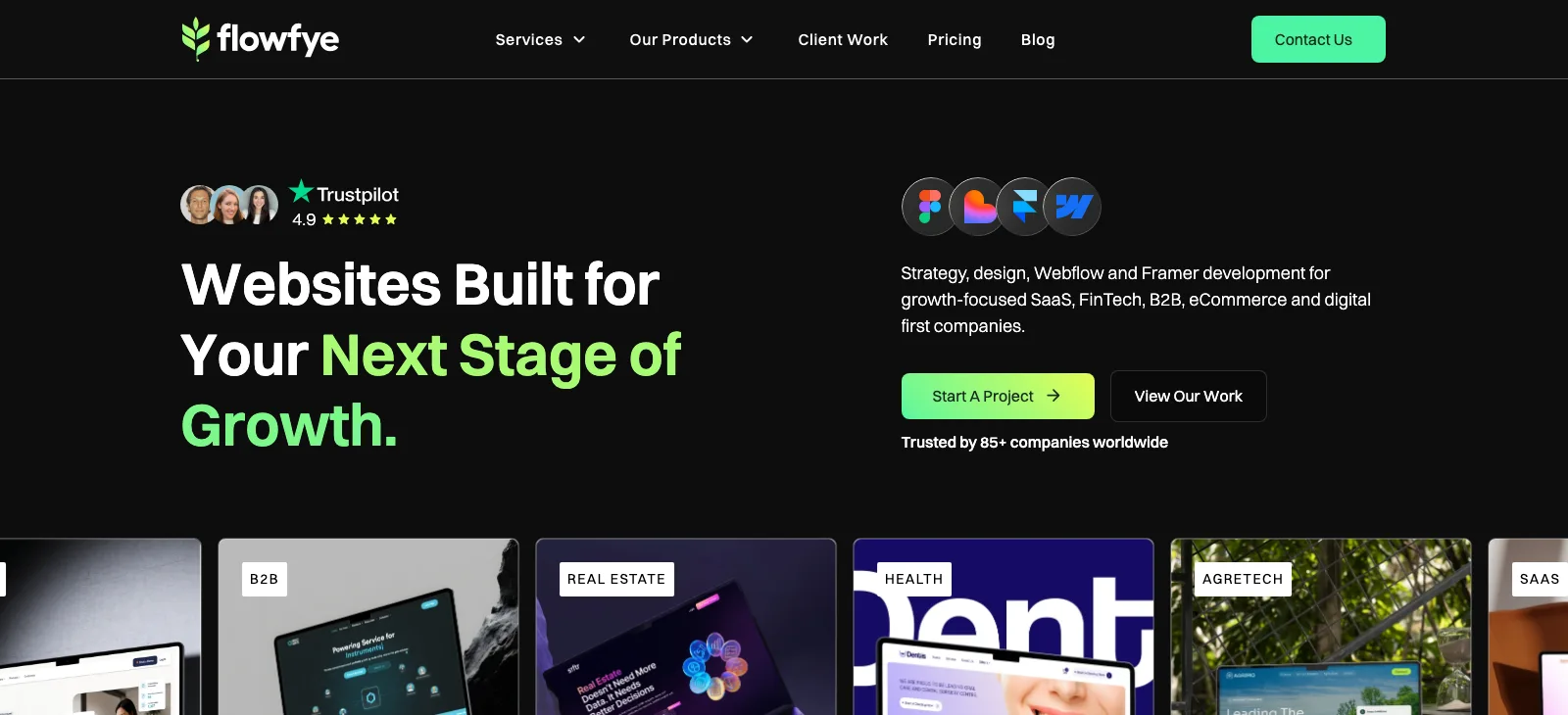
Best for: Global fintech startups and growing platforms that need a complex product explained clearly, with strategy, design, and development in one team.
Flowfye is a Webflow Certified Partner that works with fintech, SaaS, and B2B companies. Its fintech work includes Pivot Payables, a redesign that turned a complex payables product into a clear story, delivered in four weeks with a reported 35% rise in user retention. Flowfye has also designed three fintech templates for the Webflow marketplace, including Flexfye, built for payment platforms, digital banking, and financial SaaS.
One team covers positioning, UI/UX design, Webflow development, CMS setup, migration, search and AI-answer optimization, and ongoing support. Fintech projects start from $10,000.
Why fintechs choose it: fintech messaging, trust pages, and the build come from the same team, so legal and product feedback lands in one place. Fintech-specific layouts are already part of its design library, which shortens early projects.
Consider that: the team works across US and Bangladesh time zones, so agree on meeting hours at the start.
2. Flow Ninja
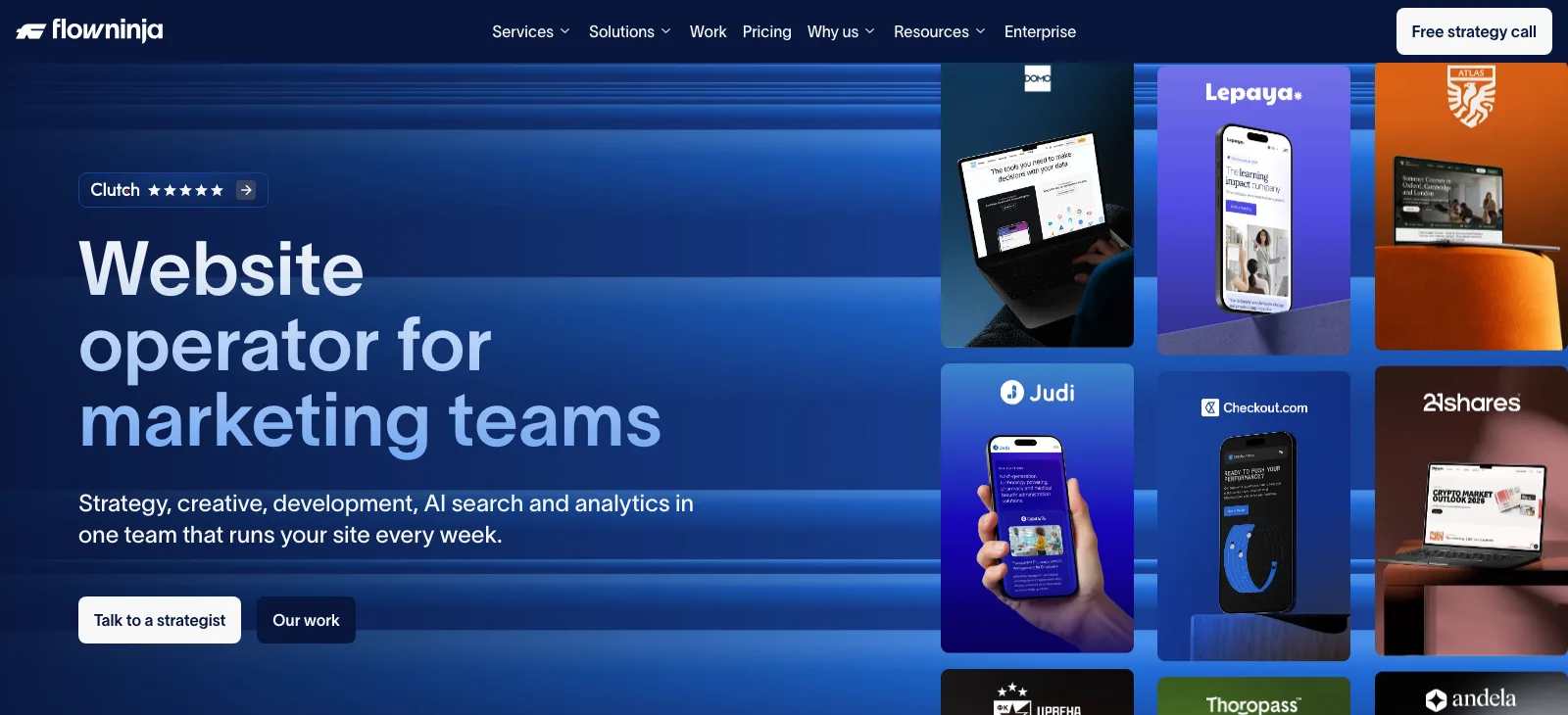
Best for: Large payments and fintech brands that want an embedded team running the site long term.
Flow Ninja is a Premium Partner whose Checkout.com website won Webflow's 2025 Website Experience of the Year. Its profile also names Trustly and Upwork among 200+ enterprise clients, and its portfolio includes 21Shares, a crypto investment firm. It works as an embedded WebOps team, with dedicated pods that build, launch, and optimize Webflow sites.
Consider that: its starting price is $20,000, and the pod model suits ongoing work more than a one-off launch.
3. Parallax
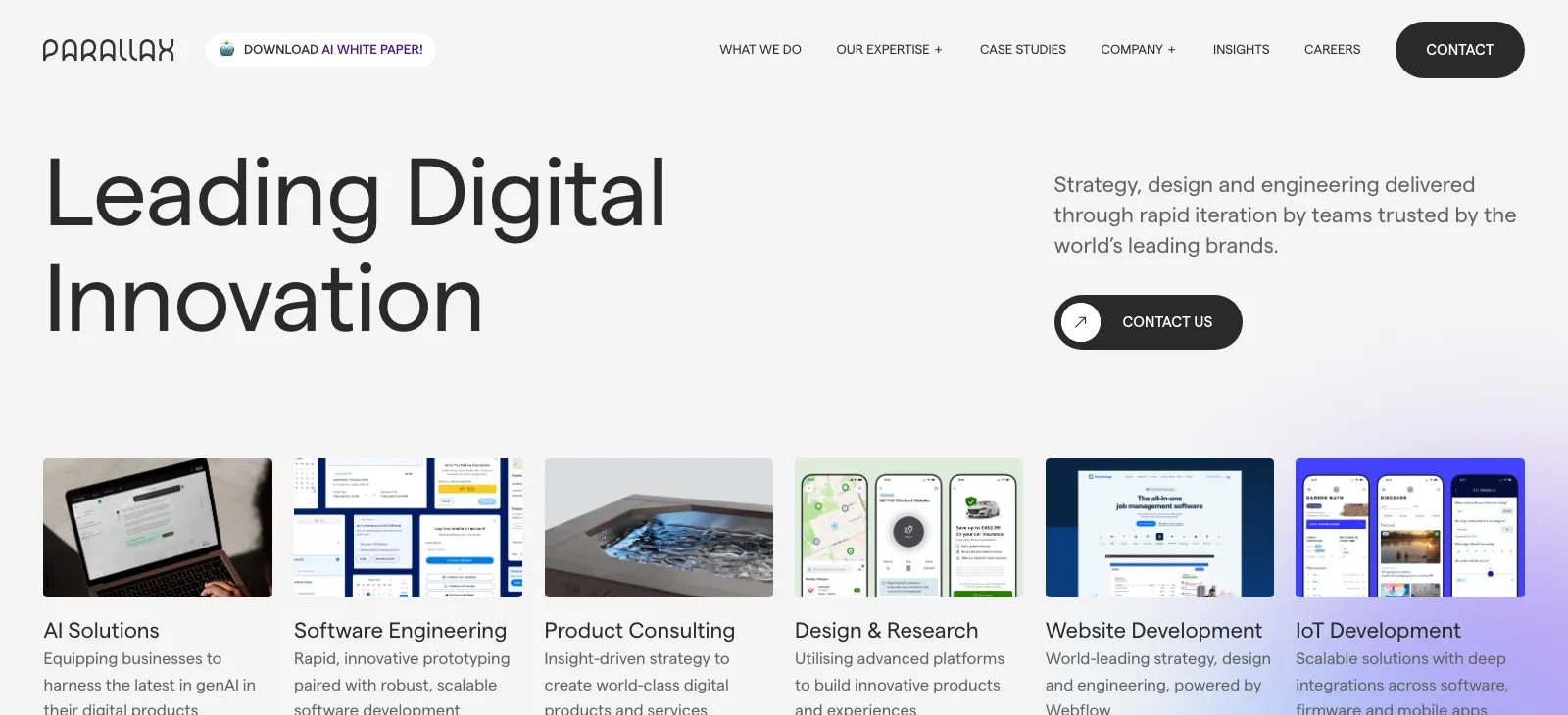
Best for: Global fintechs whose website must connect to complex systems and many markets.
Parallax is a Leeds-based consultancy and Webflow's 2025 Agency of the Year. It worked with Ebury, which moves money for 27,000 businesses in 40 countries, to rebrand and reposition the company as a modern fintech, replacing 30 separate WordPress sites with one Webflow platform.
Consider that: its starting price is $25,000, and its consultancy model fits large programmes best.
4. Finsweet
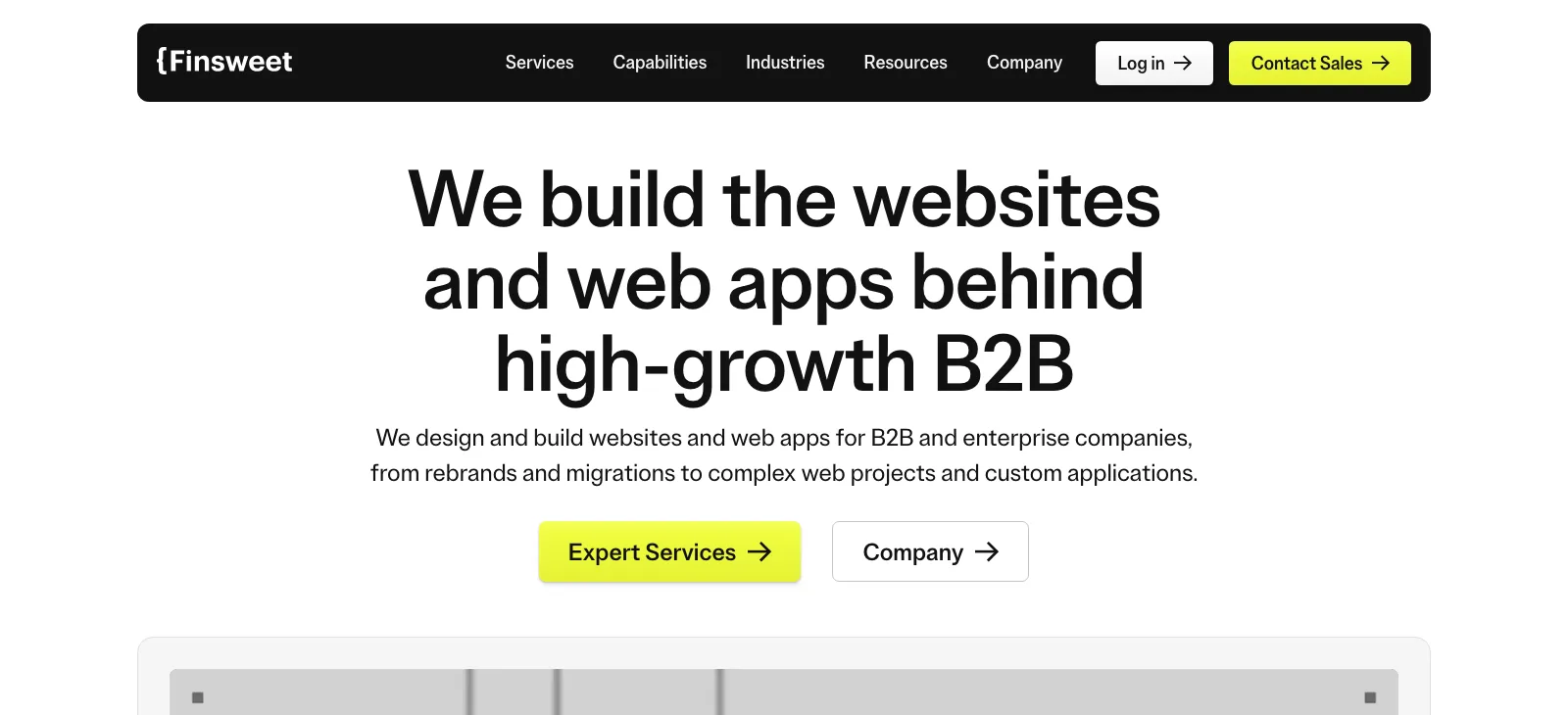
Best for: B2B fintechs whose buyers run security and compliance reviews before they sign.
Finsweet runs a dedicated B2B fintech practice. It designs and builds the marketing site along with the trust and compliance pages, and supports the security review process that comes with selling to financial institutions. Its CMS structures keep case studies, integrations, and compliance pages easy to update, and its migrations are planned to protect search performance. It created Client-First and Attributes, tools used widely in the Webflow community.
Consider that: its starting price is $15,000, and its strength is technical depth more than brand work.
5. Amply: conversion-focused sites for B2B finance software
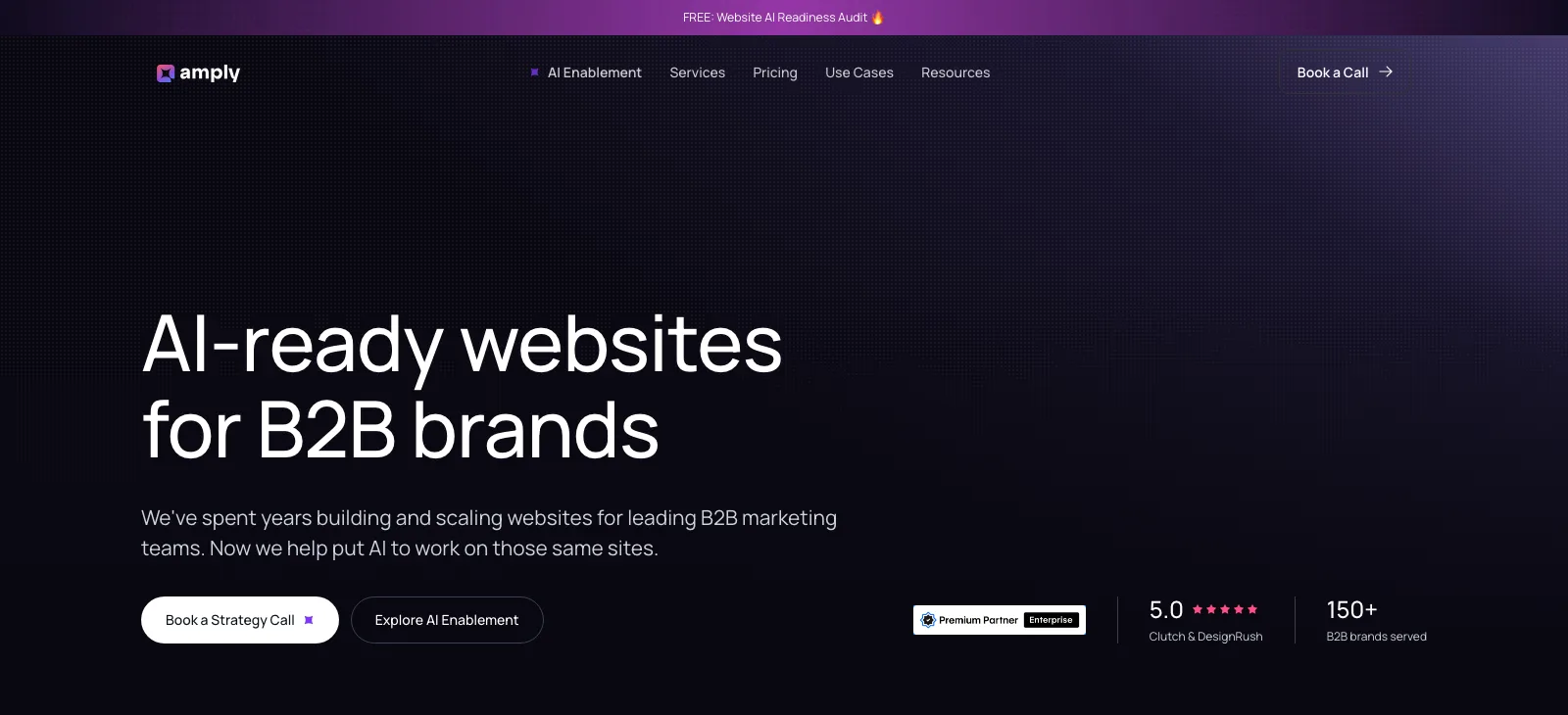
Best for: B2B finance software companies that want the website to drive pipeline.
Amply is a Salt Lake City-based Premium Partner focused on B2B brands, with Financial among its listed industry specialties. Its work includes Zeni, a financial operations platform, and BanQu, which it moved from WordPress to Webflow. Services include conversion-focused design, Webflow Optimize testing and personalization, and technical search and AI-answer optimization.
Consider that: its starting price is $20,000.
6. Digidop
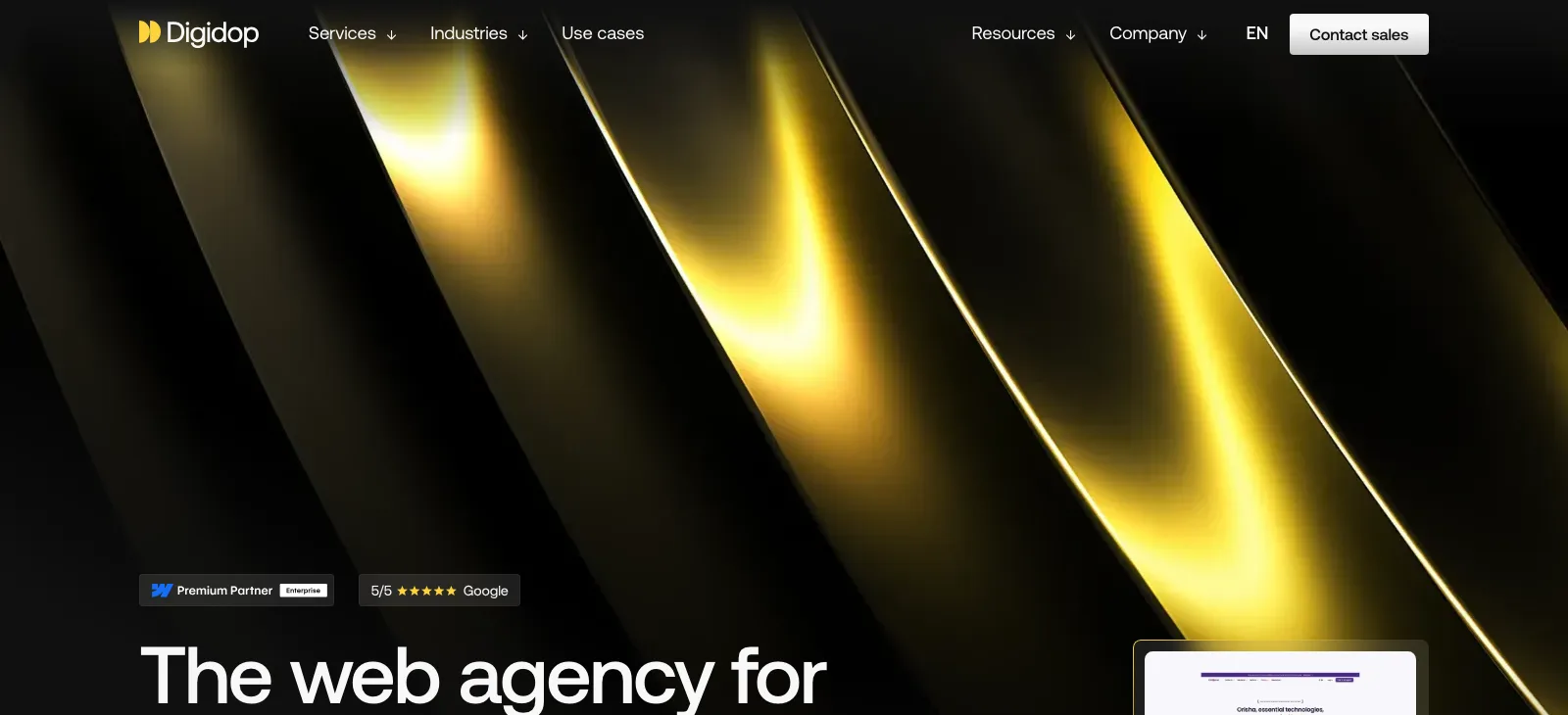
Best for: European fintechs, payment providers, and wealth platforms.
Digidop is a Paris-founded Premium Partner and Webflow's 2023 Professional Partner of the Year. Its fintech case studies include eFlow, a payments company serving highly regulated sectors, Ramify, which it supported in moving upmarket to private banking with a reported 43% rise in high-ticket lead conversion, and Credial, a Swiss private-credit platform it built a loan application simulator for.
Consider that: its strongest base is French-speaking and European markets. Its starting price is $10,000.
7. Veza Digital
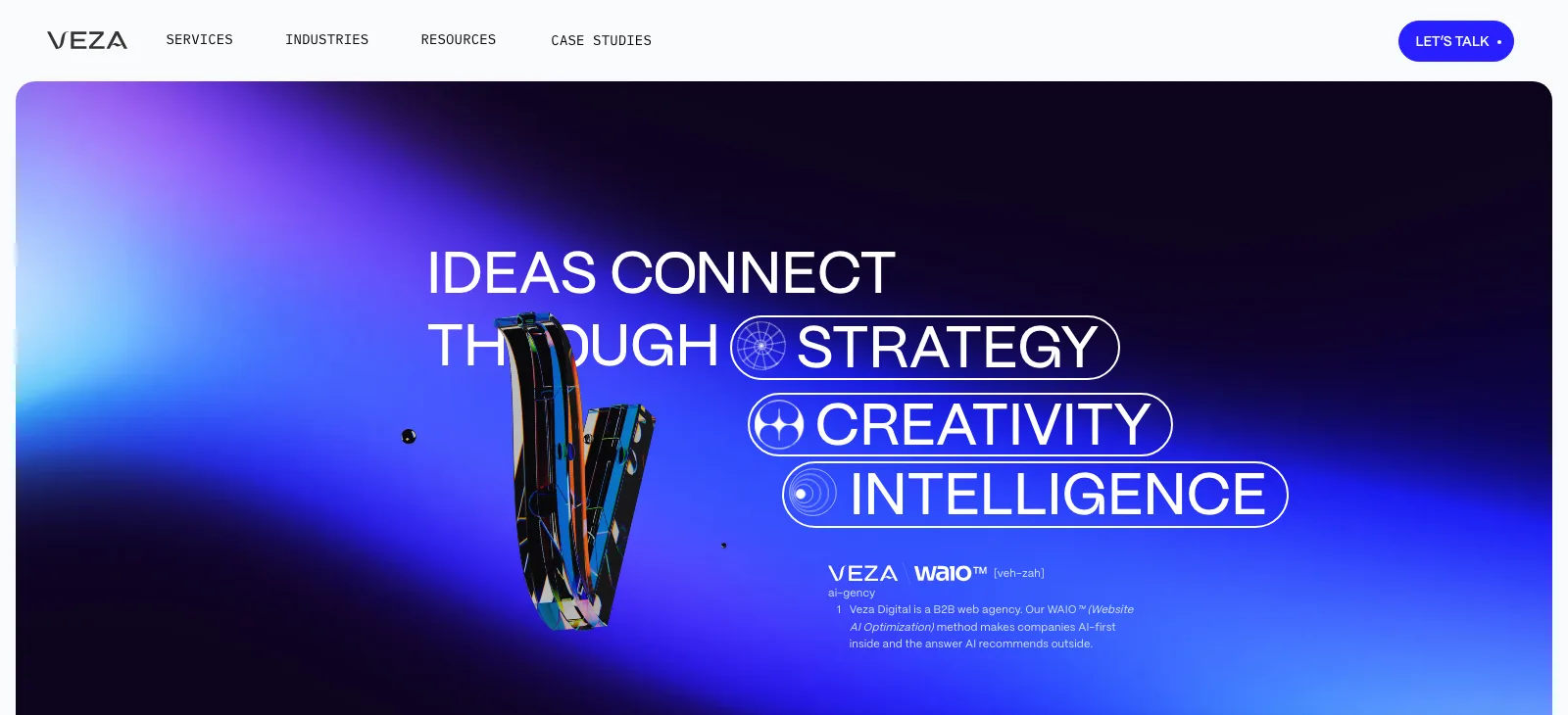
Best for: Well-funded consumer fintechs and neo-banks that want a premium site and growth marketing together.
Veza Digital is a Premium Partner with a dedicated fintech practice. It rebuilt the website for Slash, a neo-banking platform, launching the new site in six weeks, and reports 50% organic growth from the redesign. Its services span branding, design, development, SEO, and conversion work.
Consider that: its starting price is $50,000, the highest in this list.
What does a fintech website need?
A fintech website needs to build trust before it asks for anything. Visitors are deciding whether to hand over money or data, so every page has to answer "is this safe, legitimate, and right for me?" Look for an agency that can deliver these seven things:
| Requirement | Why it matters in fintech | What to ask the agency |
|---|---|---|
| Clear product explanations | Payments, lending, and treasury products are hard to grasp in seconds | Show a before-and-after homepage for a complex product |
| Visible trust signals | Licences, regulators, security standards, and partner banks reassure buyers | Where will licence numbers, security badges, and partner logos live? |
| A compliance review workflow | Marketing copy and disclosures often need legal sign-off | How can our compliance team review and approve pages before publishing? |
| Interactive tools | Calculators and estimators help buyers understand fees, rates, or savings | Have you built calculators in Webflow, and how do you test their maths? |
| A trust and security centre | B2B buyers send security questionnaires before they sign | Can you build a trust page our team can keep current in the CMS? |
| Cookie consent and data handling | Privacy laws require consent for most tracking | How do you set up consent, form handling, and data storage? |
| Accessibility and performance | Financial services face growing accessibility expectations, and slow pages lose sign-ups | Which accessibility standard do you build to, and how do you test speed? |
Keep sensitive steps such as account sign-up, identity checks, and payments in your product, not on the marketing site. A good agency will link to those flows cleanly rather than rebuild them in Webflow.
How to choose the right Webflow agency for your fintech
Match the agency to your fintech type first, then test it with fintech-specific questions.
| Your fintech | Look for |
|---|---|
| Early-stage startup | A full-service team that can explain the product and launch fast |
| B2B fintech selling to banks or enterprises | Trust and compliance pages, security review support, CRM integration |
| Consumer app or neo-bank | Strong brand and motion design, app-store links, fast mobile pages |
| Global payments or banking brand | Localization, many markets, and enterprise migration experience |
| Wealth or lending platform | Calculators and simulators, plus clear risk and fee disclosures |
Ask every agency on your shortlist these questions:
- Which fintech or financial-services sites have you built, and can we talk to one of those clients?
- How will our compliance team review and approve copy before pages go live?
- Where will licence details, regulator information, and security credentials appear?
- Have you built calculators or interactive tools, and how do you check their accuracy?
- How do you handle cookie consent, form data, and where data is stored?
- How do you protect our search rankings during a migration?
- What support do we get when regulations or products change after launch?
Red flags to watch for
- No financial-services work. Fintech trust and compliance needs are hard to learn on your project.
- Copy approval left to the end. Legal review needs a place in the timeline from the start.
- Promises of guaranteed compliance. An agency can build the pages, but your legal and compliance team decides what is compliant.
- Sensitive data collected on the marketing site. Account details and identity documents belong in your secure product, not a Webflow form.
How much does a fintech website on Webflow cost?
A custom fintech website on Webflow typically costs $20,000 to $50,000, according to the planning ranges in our Webflow cost guide. Early-stage fintechs can launch for less, and global platforms with many markets and integrations can cost far more. Calculators, compliance review rounds, localization, and migrations are what push fintech budgets higher than a typical SaaS site.
The agencies in this list publish starting prices from $10,000 to $50,000. Starting prices are minimums, so a full fintech project often costs more.
Webflow's own fees are separate. A site with a blog, case studies, or a trust centre needs at least the Premium Site plan at $25 a month, billed yearly, per Webflow's pricing page. Large fintechs often move to Webflow Enterprise for extra security, governance, and support.
For a full breakdown by tier, industry, and project phase, read our guide to how much a Webflow agency costs in 2027.
Final thoughts
The best fintech websites make a complex, regulated product feel simple and safe. The right Webflow agency for you is the one that has done that work before, at your stage and in your corner of finance. Check each agency's Webflow profile, review its fintech work, and ask the seven questions above before you sign.
Building a fintech website?
Flowfye helps global fintech startups and growing platforms turn complex financial products into clear, trusted Webflow websites, from discovery and strategy to launch and ongoing growth. Book a free 30-minute call with us. Tell us about your product, your market, and your goals, and we'll help you plan a site your customers and your compliance team will both trust. Book a meeting with Flowfye
FAQ
Which is the best Webflow agency for fintech websites?
The best agency depends on your fintech type and stage. Flowfye suits global fintech startups and growing platforms that want one full-service team. Flow Ninja and Parallax suit large payments and banking brands, Finsweet suits B2B fintechs selling to financial institutions, Amply suits B2B finance software, Digidop suits European fintechs, and Veza Digital suits well-funded consumer and neo-banking brands.
Is Webflow secure enough for a fintech website?
Webflow is widely used for fintech marketing sites, including by Ebury, Backbase, and Ramp. It handles hosting, SSL, and platform updates, and its Enterprise plan adds features such as custom roles, granular permissions, and enhanced SLAs. Keep sensitive steps such as sign-up, identity checks, and payments inside your own secure product.
Can Webflow handle compliance requirements for fintech?
Webflow gives you the tools to publish disclosures, trust pages, and cookie consent, and to control who can edit and publish. Whether your site is compliant is decided by your legal and compliance team, so build their review into the project plan.
Can a Webflow agency build financial calculators?
Yes. Agencies in this list have built calculators and simulators in Webflow, such as Digidop's loan application simulator for Credial. Ask how the agency tests calculations and who signs off on the formulas.
How long does a fintech website take to build on Webflow?
Most custom fintech sites take eight to fourteen weeks, depending on content volume, integrations, and legal review cycles. Smaller launches can go live faster, as Slash's six-week rebuild with Veza Digital shows.
Should a fintech startup use a template or a custom design?
A customized fintech template can get an early-stage company live quickly and credibly. Move to a custom design once you have product-market fit, a clear positioning, and the budget for a site that grows with you.