The best Webflow agencies for startups in 2027 are Flowfye, Gemeos, Digidop, Flowtrix, Flowout, Amply, and Veza Digital. Pick by stage and budget: Flowfye for founders who want strategy, design, and development in one team from day one; Gemeos for lean early-stage budgets; Digidop and Flowtrix for funded startups ready for a custom build; Flowout for funded teams shipping website changes every week; and Amply and Veza Digital for well-funded startups and scale-ups with premium budgets.
A startup website has one job at a time. Before launch, it must explain the product clearly enough to earn a demo or a waitlist signup. After a raise, it must look credible to buyers, investors, and new hires. Later, it must let marketing ship pages without engineering. The right agency for you depends on which of those jobs you need done now, and how much you can spend doing it.
How we chose these agencies
We looked for Webflow partners that a startup can actually afford and work with, not only agencies built for enterprise budgets. Each agency had to meet four tests:
- Startup work you can see. Live sites for early-stage or venture-backed companies, especially in SaaS, AI, fintech, or crypto.
- A published starting price. A minimum listed on its webflow.com profile, so you can tell if it fits your budget before you book a call.
- Speed and scope. The ability to launch a first version quickly and grow it after you raise.
- Verified partner status. A tier and any awards shown on its webflow.com profile, which Webflow controls.
We spread the list across budgets, from about $4,000 to $50,000 and up, and across engagement models. All partner details were checked on webflow.com on November 19, 2026, and can change, so confirm them before you sign.
The best Webflow agencies for startups at a glance
| Agency | Webflow partner tier | Based in | Published starting price | Best for |
|---|---|---|---|---|
| Flowfye | Certified Partner | Sheridan, WY, US and Dhaka, Bangladesh | Tailored quote | Founders who want strategy, design, and development in one team |
| Gemeos | Premium Partner | Paris, France | $4,000 | Early-stage SaaS, AI, and crypto startups |
| Digidop | Premium Partner | Paris, France | $10,000 | European startups that want growth and support after launch |
| Flowtrix | Premium Partner | Bengaluru, India | $10,000 | B2B SaaS and AI startups revamping after a raise |
| Flowout | Premium Partner | Ljubljana, Slovenia | $5,900 per month | Funded teams shipping website changes every week |
| Amply | Premium Partner | Salt Lake City, US | $20,000 | Funded B2B startups focused on conversion |
| Veza Digital | Premium Partner | Not listed | $50,000 | Well-funded startups and scale-ups with premium budgets |
Tiers, locations, and starting prices come from each agency's webflow.com profile.
The 7 best Webflow agencies for startups in 2027
1. Flowfye: one team from positioning to launch
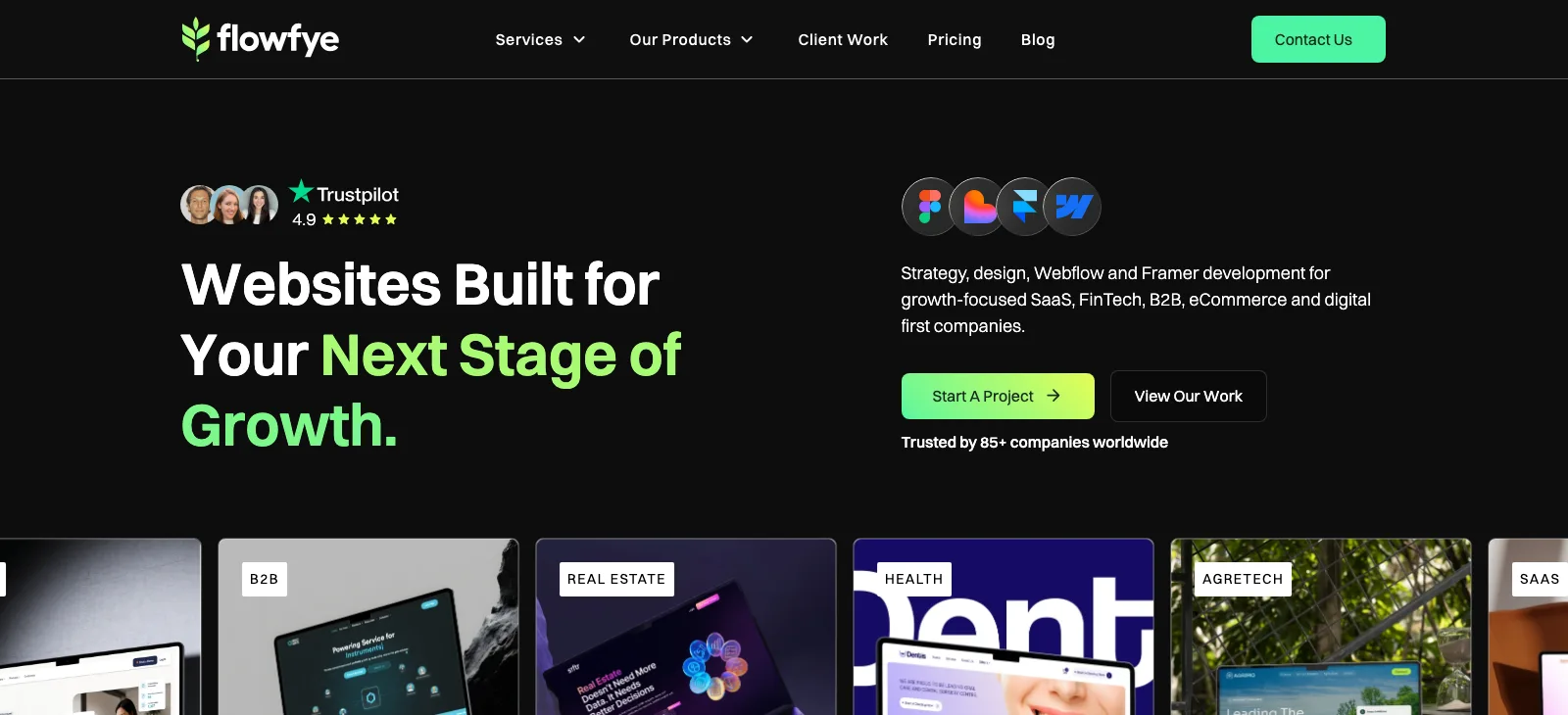
Best for: Founders who need their message, design, and Webflow build handled together, and who want to keep growing the site after launch.
Flowfye is a Webflow Certified Partner that works with startups, SaaS, fintech, and B2B companies. Its Webflow profile lists 100+ completed projects and 50+ premium templates, and says it is trusted by founders, marketers, and startups who value speed, quality, and scale. One team covers strategy, UI/UX design, Webflow and Framer development, migration, CMS setup and training, search and AI-answer optimization, and ongoing support.
Startup work shown on Flowfye's site includes:
- Terrific (AI): a new website for an AI shopping platform, delivered in two months, with a reported 150% increase in peak traffic.
- Pivot Payables (fintech): a redesign that made a complex payables product easy to understand, delivered in four weeks, with a reported 35% rise in user retention.
Why startups choose it: you work with one team instead of hiring a copywriter, a designer, and a developer separately, which saves founder time. Because Flowfye also builds templates, a lean first version can launch quickly and grow into a custom site later.
Consider that: Flowfye holds Webflow's Certified tier, while most agencies below hold the Premium tier.
2. Gemeos: Webflow sites for early-stage tech startups
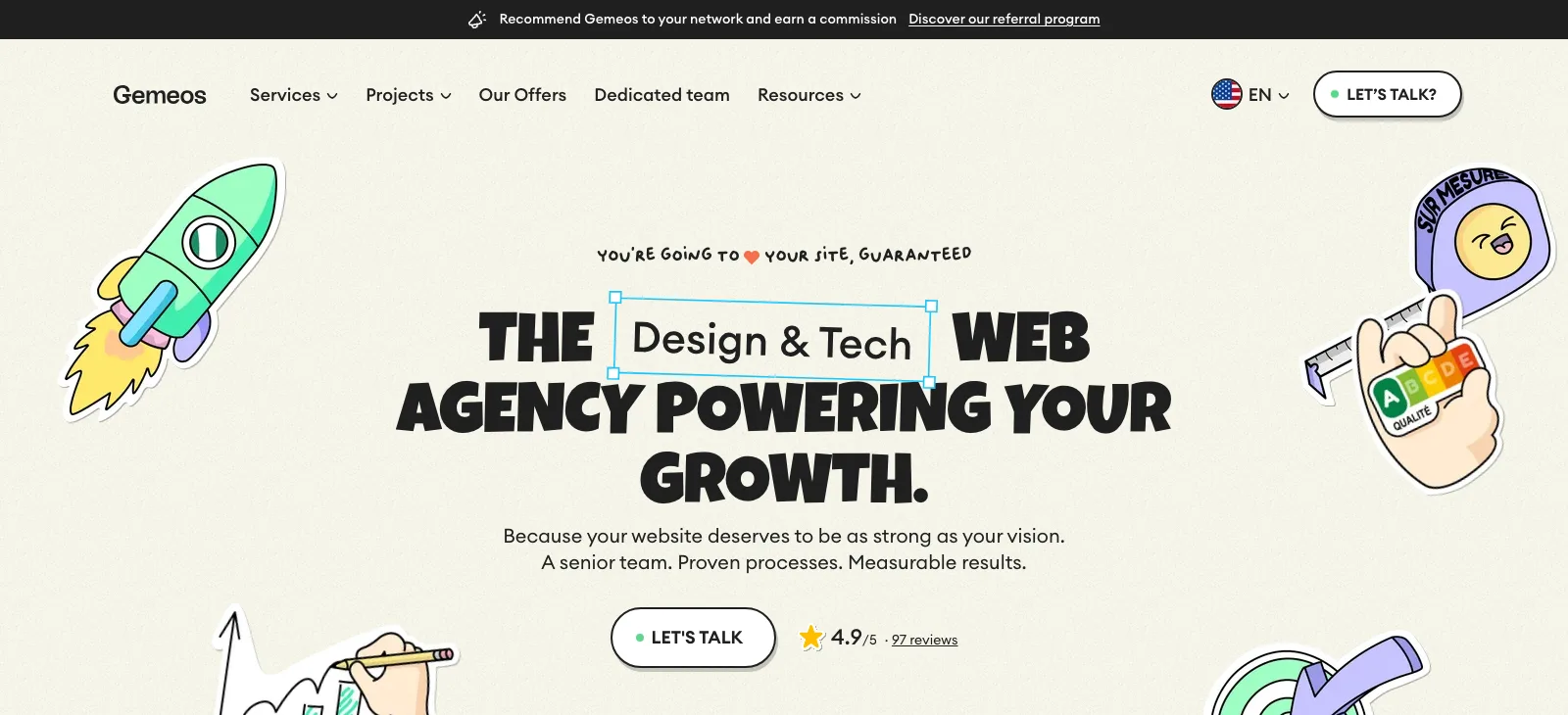
Best for: Early-stage SaaS, AI, and crypto startups, especially in Europe.
Gemeos is a Paris-based Premium Partner whose profile sums up its focus: Webflow sites for startups. Its Webflow portfolio includes startups such as Modjo, Koncile, Callr, and Zerion. Services range from branding and design systems to development, integrations, and migrations, starting at $4,000.
Consider that: Gemeos is a Premium Partner that builds Webflow sites only for startups, making it a strong fit for founders before funding.
3. Digidop: build and grow for European startups
Best for: Startups selling in Europe that want strategy, a custom build, and growth support after launch.
Digidop is a Paris-founded Premium Partner, in the program since July 2021. It won Webflow's 2023 Professional Partner of the Year award. Its services cover strategy, web design, Webflow development, migration, and ongoing support and growth. Its starting price is $10,000.
Consider that: its strongest base is French-speaking and European markets.
4. Flowtrix: B2B SaaS and AI revamps after a raise
Best for: B2B SaaS and AI startups replacing a first website after funding.
Flowtrix is a Bengaluru-based Premium Partner that reports 120+ projects in five years. It handles messaging and copywriting through design, development, and custom integrations, and also builds web apps on a Webflow, Wized, and Xano stack. It was a 2025 Top New Partner finalist. Its starting price is $10,000.
Consider that: its focus is B2B. Consumer startups may find a better fit elsewhere.
5. Flowout: a subscription for teams that ship every week
Best for: Funded startups with a marketing team that requests website changes every week.
Flowout is a Slovenia-based Premium Partner that sells Webflow design and development as a monthly subscription. It lists Jasper and Sequoia Capital among its clients and was a 2024 Agency of the Year finalist.
Consider that: subscriptions start at $5,900 a month, so this model makes sense once you have steady demand, not for a first launch.
6. Amply: conversion-focused sites for funded B2B startups
Best for: Funded B2B startups that want their website to turn visitors into pipeline.
Amply is a Salt Lake City-based Premium Partner that works with B2B brands. Its services include conversion-focused design, brand identity, Webflow Optimize testing and personalization, technical search and AI-answer optimization, and migrations. Its Webflow portfolio includes startups and scale-ups such as Zenhub, Fixify, Simon Data, and Chattermill. It was a 2023 Top New Partner finalist.
Consider that: its starting price is $20,000, so it fits after a seed or Series A round.
7. Veza Digital: premium builds for well-funded startups and scale-ups
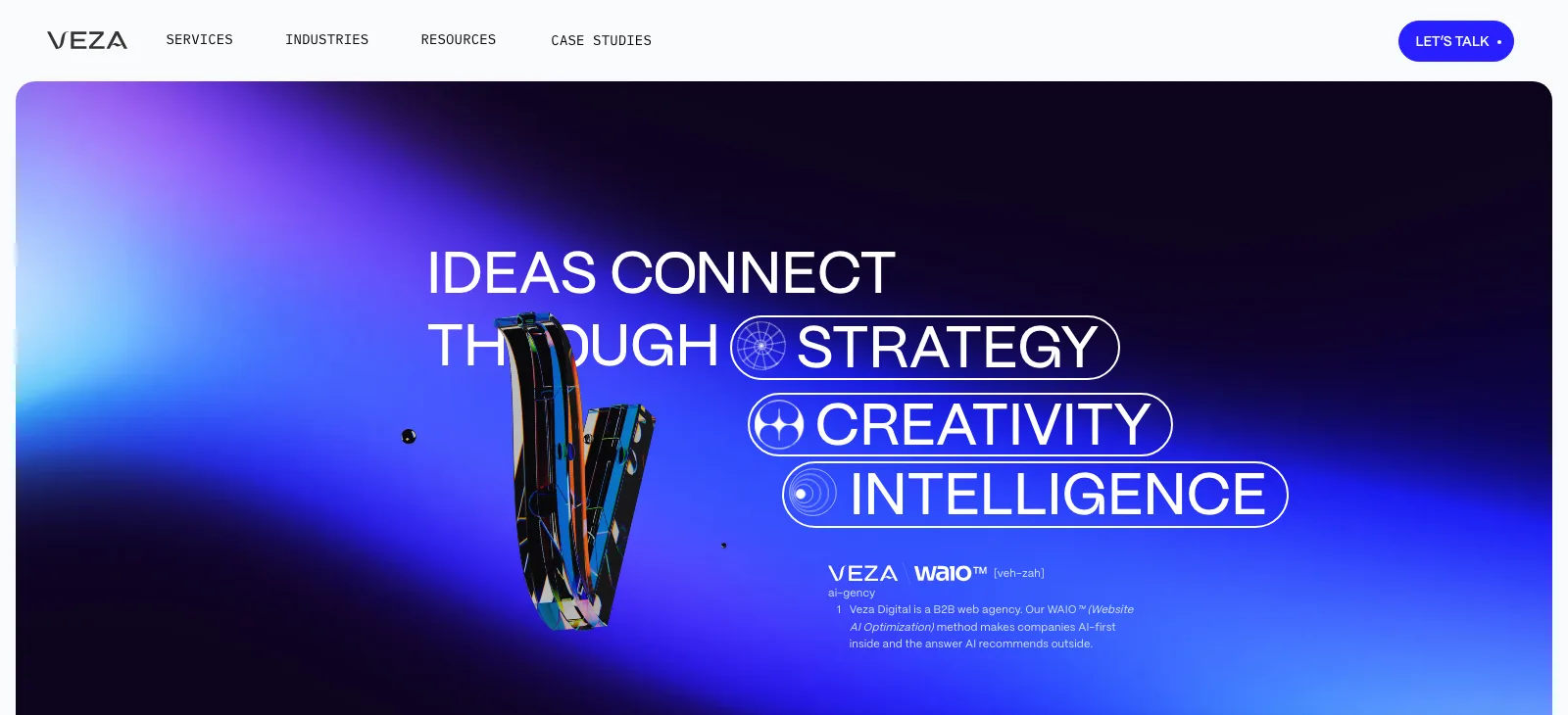
Best for: Well-funded startups and scale-ups that want a premium marketing site and can invest at the top of the market.
Veza Digital is a Premium Partner, in the program since September 2022, that designs and develops marketing websites on Webflow for start-ups and scale-ups. Its profile names Chili Piper, Slash, and TicketSpice among its clients. Services span branding, design, development, migrations, integrations, and accessibility work.
Consider that: its published starting price is $50,000, the highest in this list, so it suits a company with significant funding and a website that drives growth.
What does a startup website need at each stage?
A startup website should do the job your stage requires and nothing more. Build what you need now, on a structure that can grow, and leave the rest for after your next milestone.
| Stage | The website's main job | Pages that matter | What you can skip for now |
|---|---|---|---|
| Pre-seed | Explain the product and capture interest | Homepage, waitlist or demo form, short about page | Blog, case studies, custom animation |
| Seed | Win first customers and look credible to investors and hires | Product, pricing or demo, about, careers, first customer stories | Large resource libraries, multiple languages |
| Series A and later | Generate pipeline and support a marketing team | Feature and solution pages, integrations, comparisons, blog, case studies | Very little, because the site is now a main growth channel |
Three things matter at every stage:
- Clear messaging. Visitors should understand what you do, who it is for, and why it is better within a few seconds of landing.
- A structure that grows. Reusable sections and a planned CMS let you add pages without redesigning the site.
- Ownership. Your team should be able to edit copy and publish pages in Webflow without waiting on the agency.
Agency, freelancer, template, or DIY: which fits your startup?
The right option depends on your budget, your deadline, and how much founder time you can spare. An agency is not always the answer, especially before you have validated your positioning.
| Option | Best when | Main trade-off |
|---|---|---|
| DIY with a Webflow template | You have no budget, a designer's eye, and spare evenings | Your time, and a site that may look like others using the same template |
| Template customized by an agency | You need a professional site within weeks on a small budget | Limited to the template's layouts |
| Freelancer | Designs and copy are done and you only need the build | One person's availability, and gaps in strategy or copy |
| Agency | You need messaging, design, development, and integrations handled together | Higher cost and a longer process |
| Subscription or retainer | You ship website changes every week after funding | A recurring monthly cost |
A common path is to launch on a customized template before or around your seed round, then commission a custom build once you know who buys and why. That keeps early cash for the product while still giving you a credible site.
Questions to ask a Webflow agency before you hire
Ask these seven questions on your first call. The answers show whether the agency understands startups or only builds websites:
- Which startups at our stage have you built for, and can we talk to one of them?
- How do you learn our product and audience before you design?
- Who writes the copy, and is it included in the price?
- What is the smallest version of this site you would launch first, and what would you add later?
- How will our team edit pages and publish new ones after launch?
- What happens if we raise and need to grow the site in six months?
- What exactly does the quote include, and how are extra changes priced?
Red flags to watch for
- No startup work in the portfolio. Enterprise experience does not always translate to a fast, lean launch.
- A quote without a scope. If the proposal does not list pages, revision rounds, and deliverables, you cannot compare it with others.
- No plan for handover. If the agency cannot explain how your team will edit the site, every change will cost you later.
- Partner claims you cannot verify. Check the tier and awards on the agency's webflow.com profile, not only on its own site.
How much does a Webflow website cost for a startup?
A startup Webflow website typically costs $1,500 to $6,000 for a customized template, $6,000 to $20,000 for a custom marketing site, and $15,000 or more for a larger SaaS site with a structured CMS and integrations. These are planning ranges, and your scope decides where you land.
The agencies in this list publish starting prices from $4,000 to $50,000 per project, or $5,900 a month for a subscription, on their webflow.com profiles. Starting prices are minimums, so expect a full site to cost more.
Add Webflow's own fees. A site without a CMS can run on the Basic plan at $15 a month, and a site with a blog or case studies needs the Premium plan at $25 a month, both billed yearly, per Webflow's pricing page. For a full breakdown by tier, industry, and project phase, read our guide to how much a Webflow agency costs in 2027.
Final thoughts
The best Webflow agency for your startup is the one that fits your stage, your budget, and how fast you need to move. Before funding, spend for clarity and speed. After funding, invest in a structure your marketing team can grow. At every stage, make sure you own the site and can edit it yourself.
Shortlist two or three agencies from this guide, check their webflow.com profiles, and ask each one the seven questions above.
Ready to launch your startup website?
Flowfye helps founders turn their product into a clear, credible Webflow website, from discovery and strategy to launch and growth after your next raise. Book a free 30-minute call with us. Tell us where your startup is today, and we'll help you decide what to build now, what can wait, and how to launch fast.
FAQ
Which is the best Webflow agency for startups?
The best agency depends on your stage and budget. Flowfye suits founders who want strategy, design, and development in one team. Gemeos suits lean early-stage budgets. Digidop and Flowtrix suit funded startups ready for a custom build, Flowout suits funded teams with weekly website requests, and Amply and Veza Digital suit well-funded startups with premium budgets.
Is Webflow good for startups?
Yes. Webflow lets non-developers edit and publish pages, includes hosting and security in its Site plans, and has a CMS for blogs and case studies. That lets a small team keep the site current without an engineer.
How long does it take to build a startup website on Webflow?
A customized template can launch in one to three weeks. A custom marketing site usually takes four to eight weeks, depending on how quickly copy and feedback arrive.
Should a pre-seed startup hire a Webflow agency?
Only if the website is critical to your next milestone, such as a fundraise or a launch. Otherwise, a customized template is usually the better use of cash until your positioning settles.
Can we switch from Framer or WordPress to Webflow later?
Yes. Agencies in this list handle migrations, including moving pages and blog posts and setting up redirects so existing search traffic is protected.
Do we own the website after an agency builds it?
You should. Ask for the site to be transferred to your own Webflow Workspace at handover, along with any template, font, and image licenses.