The conversation around framer vs webflow has changed dramatically in recent years.
What once felt like a simple comparison between a structured builder and a design-first tool has now evolved into something far more strategic. In 2026, choosing between Webflow and Framer is not just about aesthetics or workflow preference. It is about scalability, ownership, SEO performance, content strategy, and long-term digital growth.
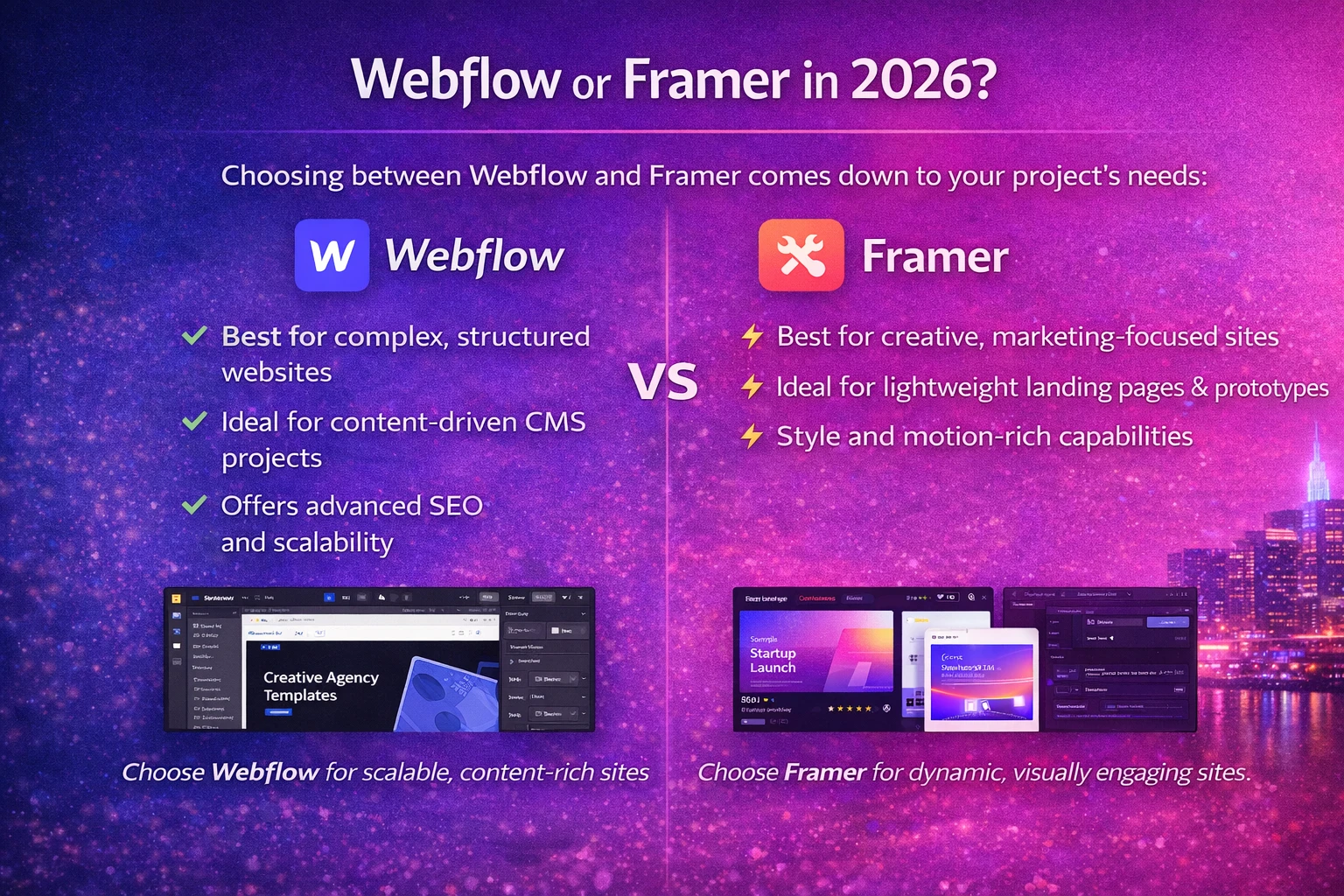
If you are wondering which platform is right for your business, this guide will walk you through the real differences - beyond surface-level features.
What Is Webflow and Why It Still Leads in Structure
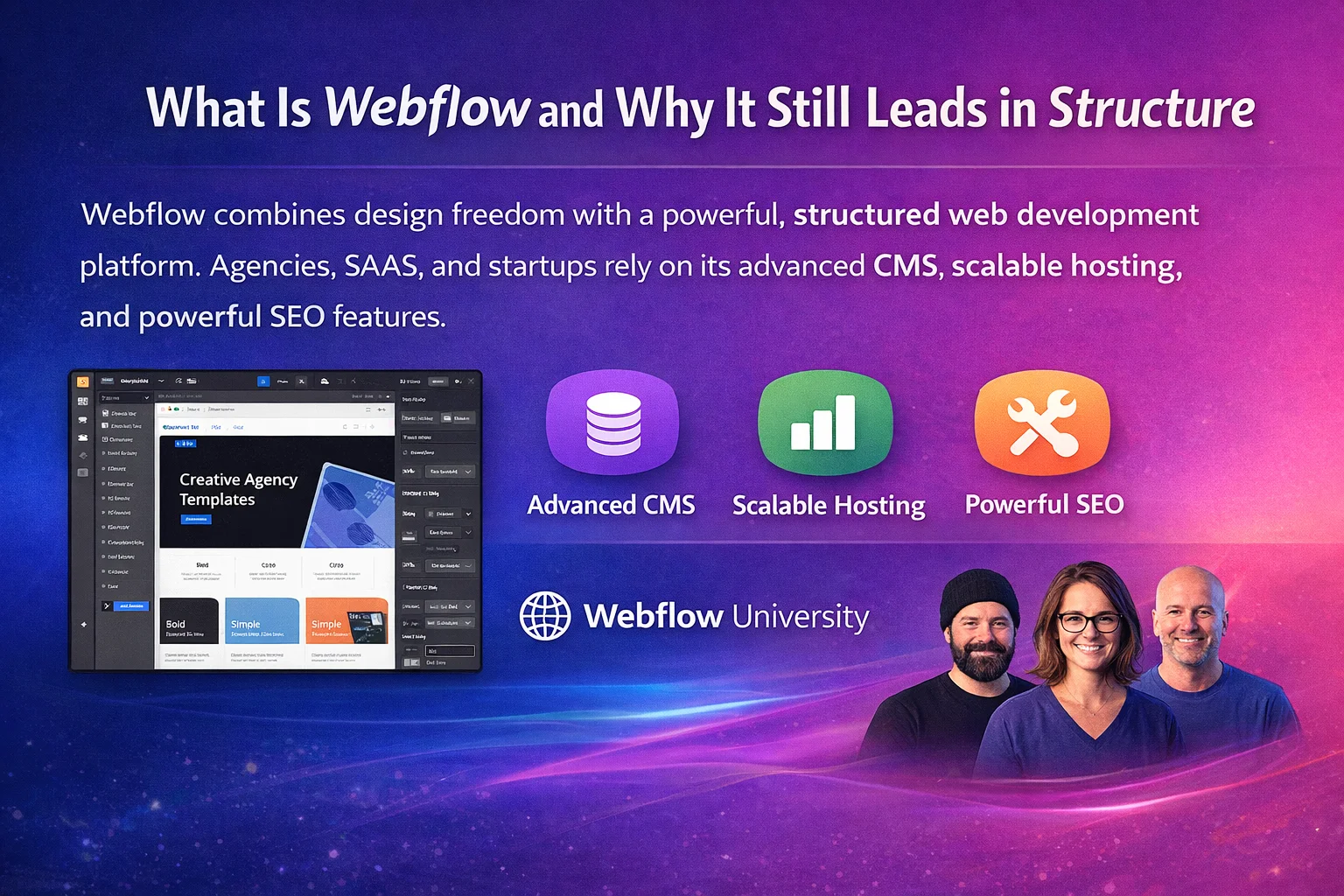
If someone asks what is webflow, the short answer is that it is a visual development platform. But in reality, it has grown into something much larger.
Webflow combines design flexibility with production-grade infrastructure. It allows teams to build fully responsive websites, structure dynamic content through CMS collections, configure advanced webflow seo, and control hosting - all inside a single ecosystem.
The platform has matured significantly, supported by resources like webflow university, which helps designers and developers understand structured layouts, responsive systems, CMS architecture, and performance optimization.
Beyond that, the professional ecosystem has expanded. There is strong demand in webflow careers, and the rise of the global webflow agency network reflects how businesses trust the platform for serious, scalable projects. Updates and improvements regularly appear in webflow news, further strengthening its enterprise positioning.
Webflow today is not just a builder. It is digital infrastructure.
How Framer Has Evolved in 2026
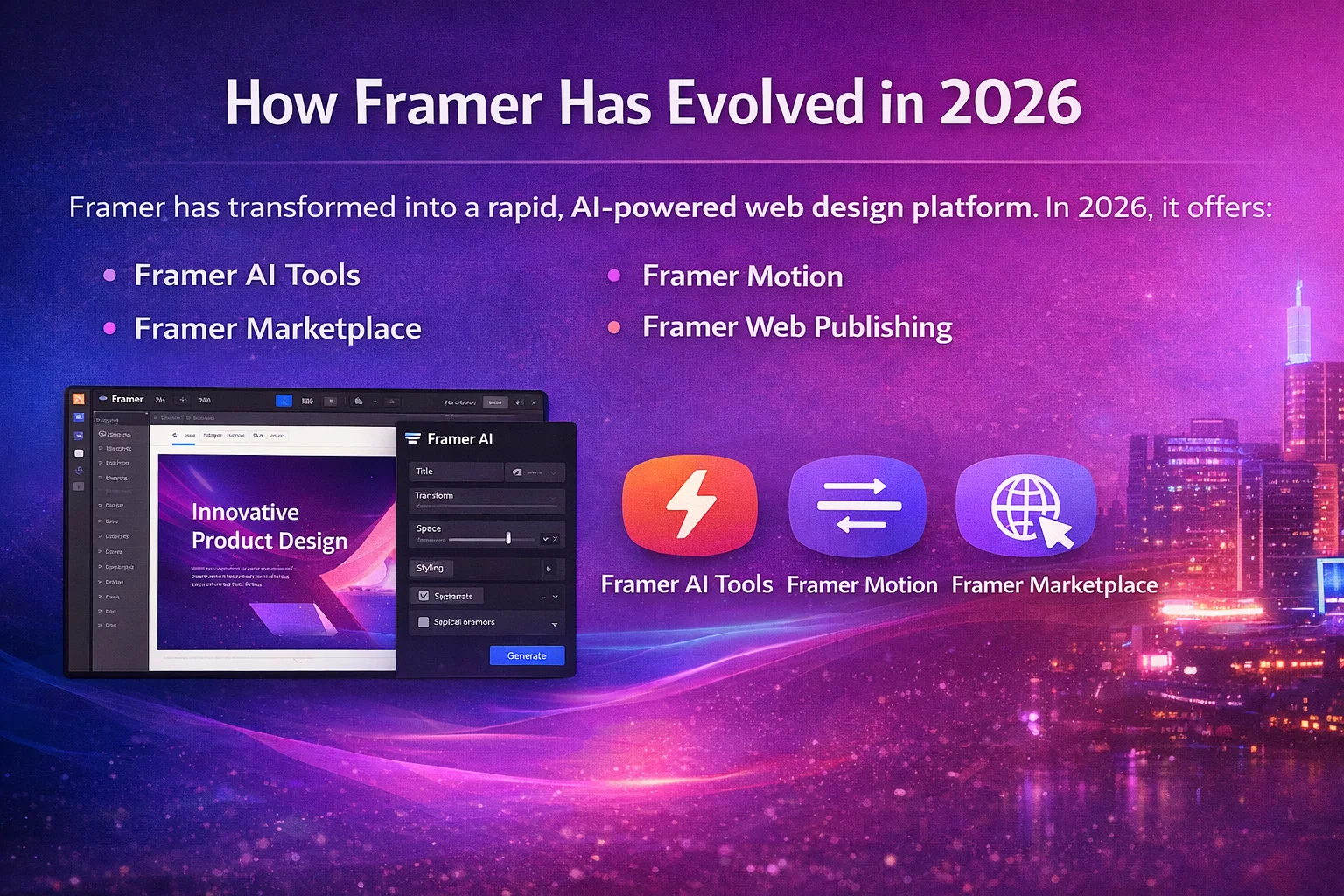
A framer website can now be launched incredibly fast.
Framer has transformed from a prototyping tool into a full publishing platform that prioritizes creativity and speed. It feels natural for designers, especially those transitioning from Figma.
The introduction of framer ai has accelerated development dramatically. Landing pages can be generated in seconds, layouts can adapt quickly, and design iteration feels almost frictionless.
Framer’s ecosystem now includes:
- framer marketplace
- framer shop
- framer university
- Expanded integrations inside the framer app
- Seamless deployment through framer web
- Advanced animation powered by framer motion
Framer emphasizes immediacy and creative freedom.
Webflow emphasizes control and structure.
That philosophical difference still defines the core distinction.
Design Workflow: figma to webflow vs Framer’s Native Feel
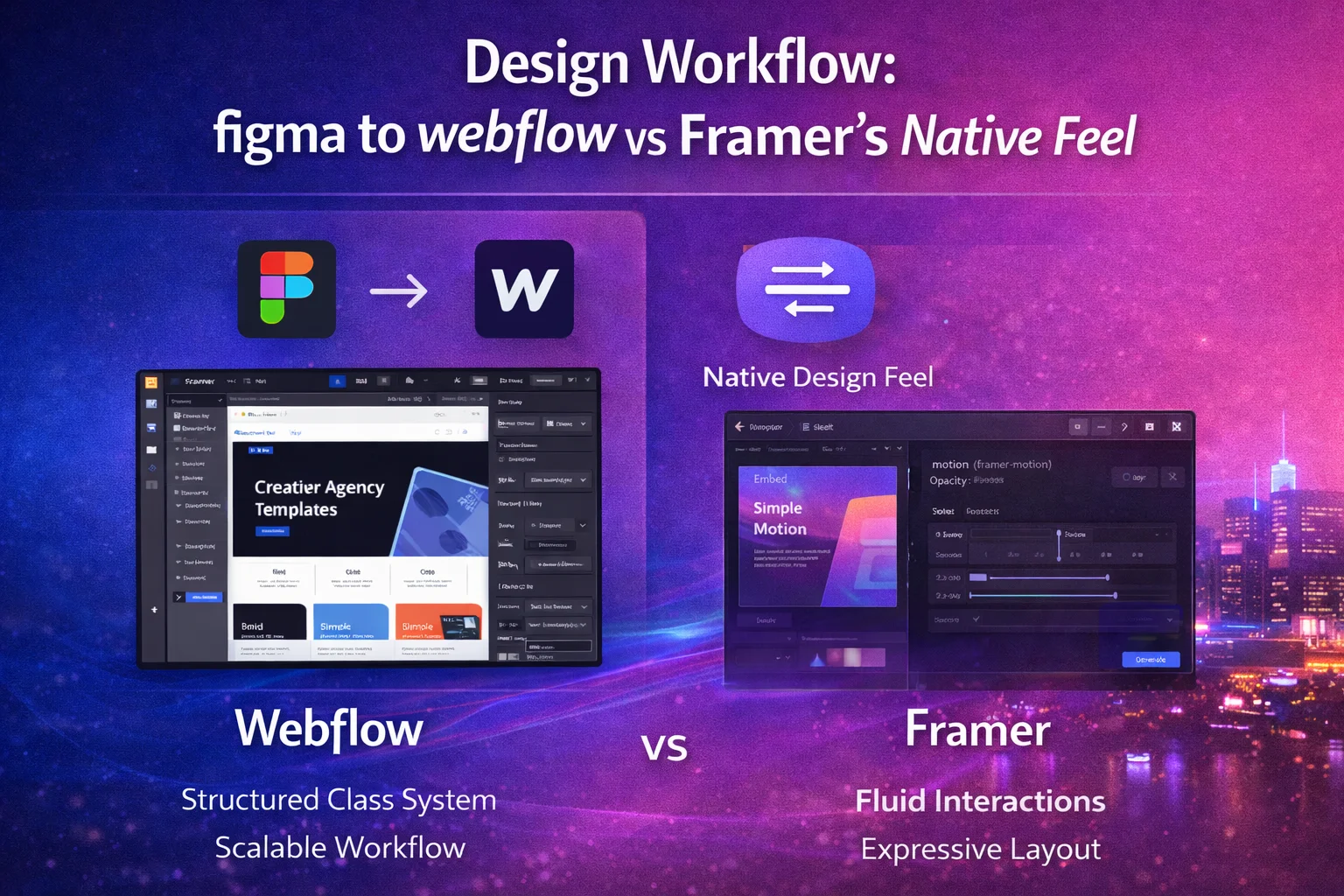
Many product teams rely on figma to webflow workflows because Webflow allows pixel-level implementation with structured class systems and reusable components.
Webflow feels closer to front-end development logic. Designers can build visually, but the output remains organized and scalable.
Framer, on the other hand, feels almost like designing directly in a creative tool. Its motion system powered by framer motion allows micro-interactions and transitions to feel fluid and expressive.
If your priority is long-term scalability and structured production, Webflow provides more architectural control.
If your priority is rapid visual experimentation, Framer feels lighter and faster.
Templates and Marketplace Ecosystem
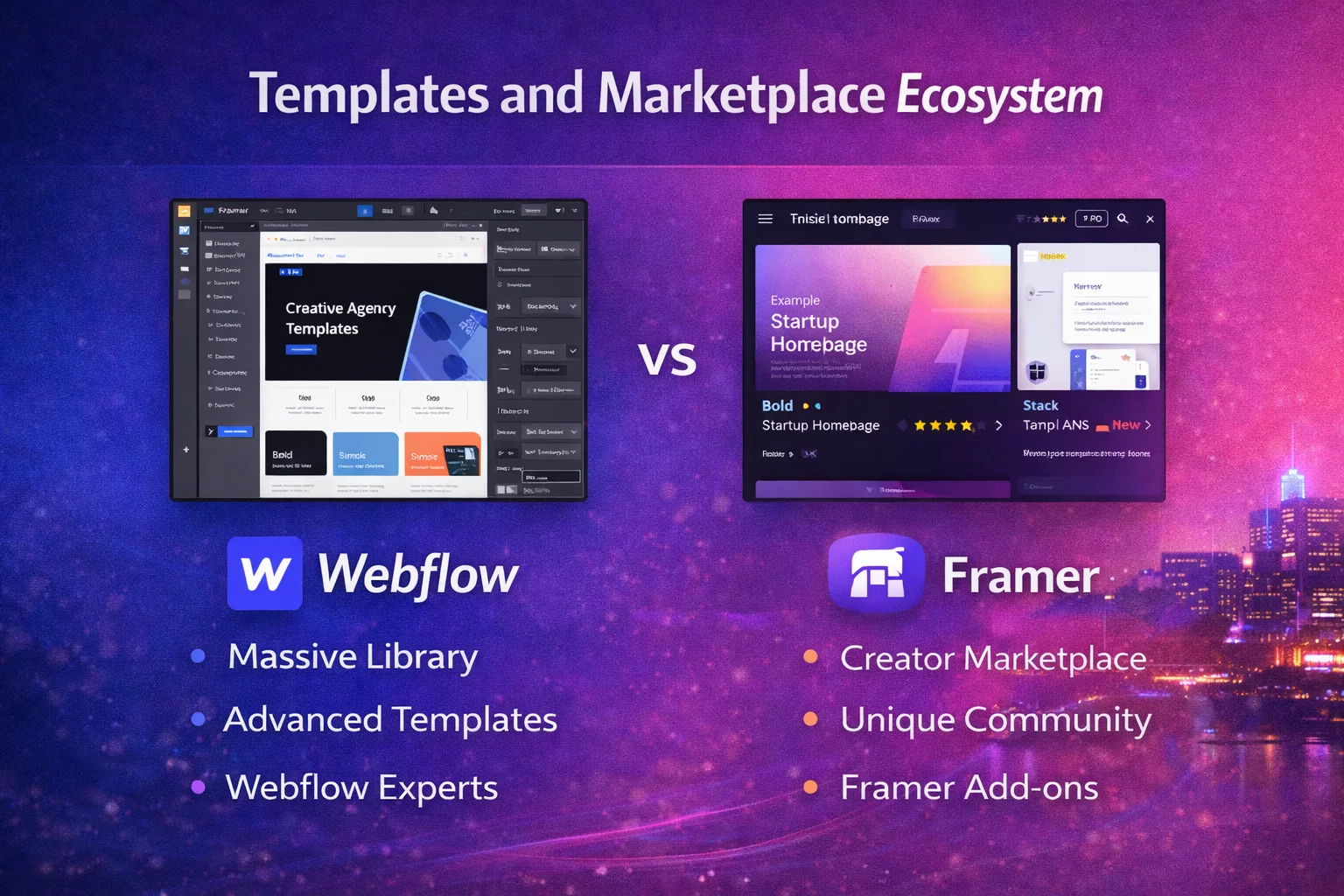
The webflow templates ecosystem is mature and business-oriented. There are thousands of premium webflow template options across industries: SaaS, agencies, real estate, consulting, and more.
Many businesses start with a template webflow solution and customize it into a fully branded website.
On the Framer side, the ecosystem is growing quickly through framer marketplace and framer shop. While some users mistakenly search for framer tamplates, the official template system continues to expand with sleek, modern designs.
Framer templates are excellent for startups and product launches. Webflow templates are stronger for structured, content-heavy platforms.
CMS and Content Scaling
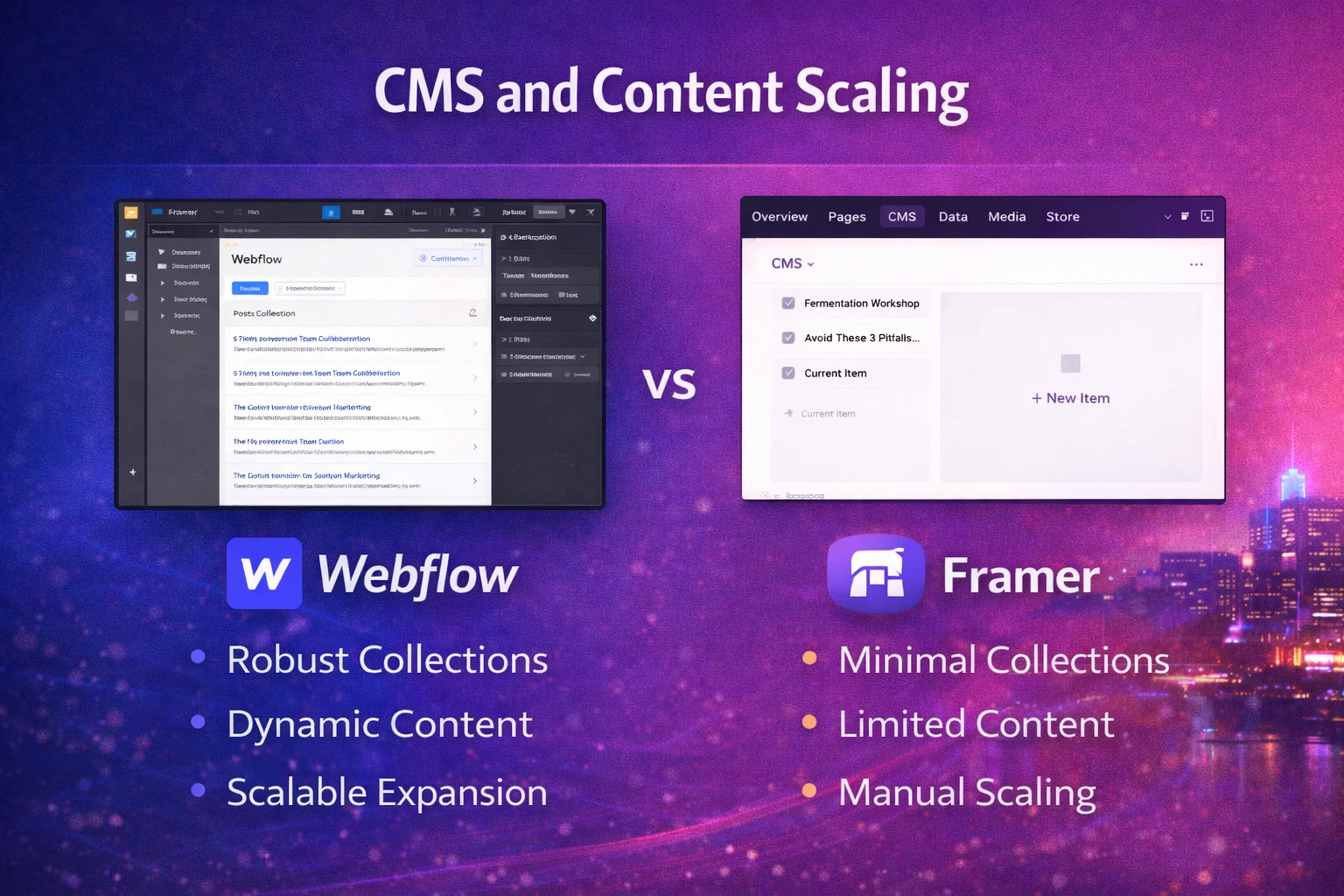
If your business depends on content marketing, blog publishing, directories, or dynamic data structures, Webflow currently provides deeper CMS capabilities.
Webflow’s CMS system integrates tightly with webflow seo, giving marketers granular control over metadata, structured data, redirects, and indexing rules.
Framer supports CMS features, but it remains lighter in complexity.
For marketing teams planning multi-year SEO growth, Webflow offers stronger long-term content infrastructure.
SEO Capabilities in 2026
Search visibility remains critical.
With webflow seo, you can configure advanced metadata, manage redirects, control indexing, implement structured markup, and optimize performance.
Framer’s SEO capabilities have improved, but Webflow still provides more detailed manual control.
If organic traffic is a key growth channel, this distinction matters.
AI Acceleration vs Structural Precision
The rise of framer ai is reshaping how fast websites can be launched.
AI-assisted layouts and content blocks reduce friction dramatically.
Webflow’s focus remains on precision rather than instant automation. It prioritizes structured systems over speed-first generation.
Framer wins in velocity.
Webflow wins in depth.
Career and Industry Demand
The market reflects platform maturity.
There is strong demand for professionals in webflow careers, and agencies specializing as a webflow agency continue to scale globally.
Framer demand is rising, but Webflow currently offers broader commercial opportunity.
For professionals building long-term expertise, Webflow’s ecosystem remains larger.
So, Which Option Should You Choose?
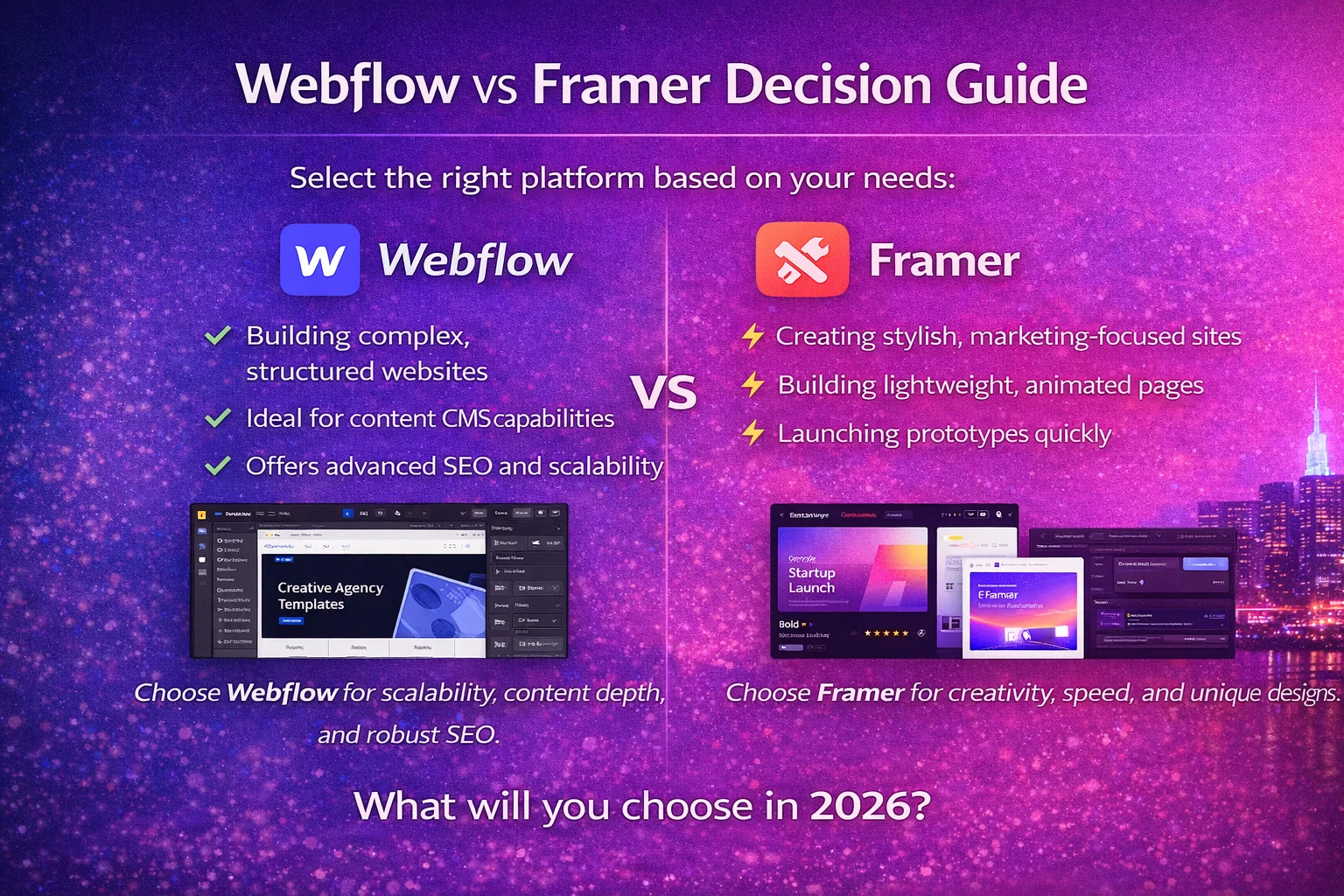
Choose Webflow if:
- You are building a scalable SaaS platform
- You depend on SEO growth
- You require structured CMS
- You plan long-term digital expansion
Choose Framer if:
- You need rapid landing page production
- You prioritize interactive design
- You leverage framer ai for speed
- You focus on motion-driven storytelling
The choice is strategic, not emotional.
How Flowfye Helps You Execute the Right Way
Choosing between platforms is only the beginning.
At Flowfye, we specialize in turning platform potential into business performance.
We provide:
UI/UX Design
Conversion-focused design systems aligned with business goals.
Webflow Development
Advanced CMS architecture, performance optimization, and full webflow template customization with structured webflow seo implementation.
Framer Development
Interactive builds using framer motion, AI-assisted production with framer ai, and scalable publishing via framer web.
Theme Customization
Purchased webflow templates or designs from framer marketplace or framer shop? We transform them into fully branded websites.
Template Customization
From minor layout adjustments to complete template webflow system refinements.
Platform Migration
If you are transitioning after comparing framer vs webflow, we ensure performance, SEO equity, and structural integrity remain intact.
Final Thought
In 2026, choosing between Webflow and Framer is less about trends and more about trajectory. Your decision should reflect how you plan to grow, whether you prioritize structured scalability, deep webflow seo, and long-term CMS architecture, or rapid iteration powered by framer ai and motion-driven creativity. Both platforms are capable. Both are modern. But the right choice is the one that aligns with your business model, content strategy, and future expansion plans. A website today is not just a digital presence, it is infrastructure, credibility, and growth engine combined. Choose the platform that supports where you are going, not just where you are starting.

